BizNav
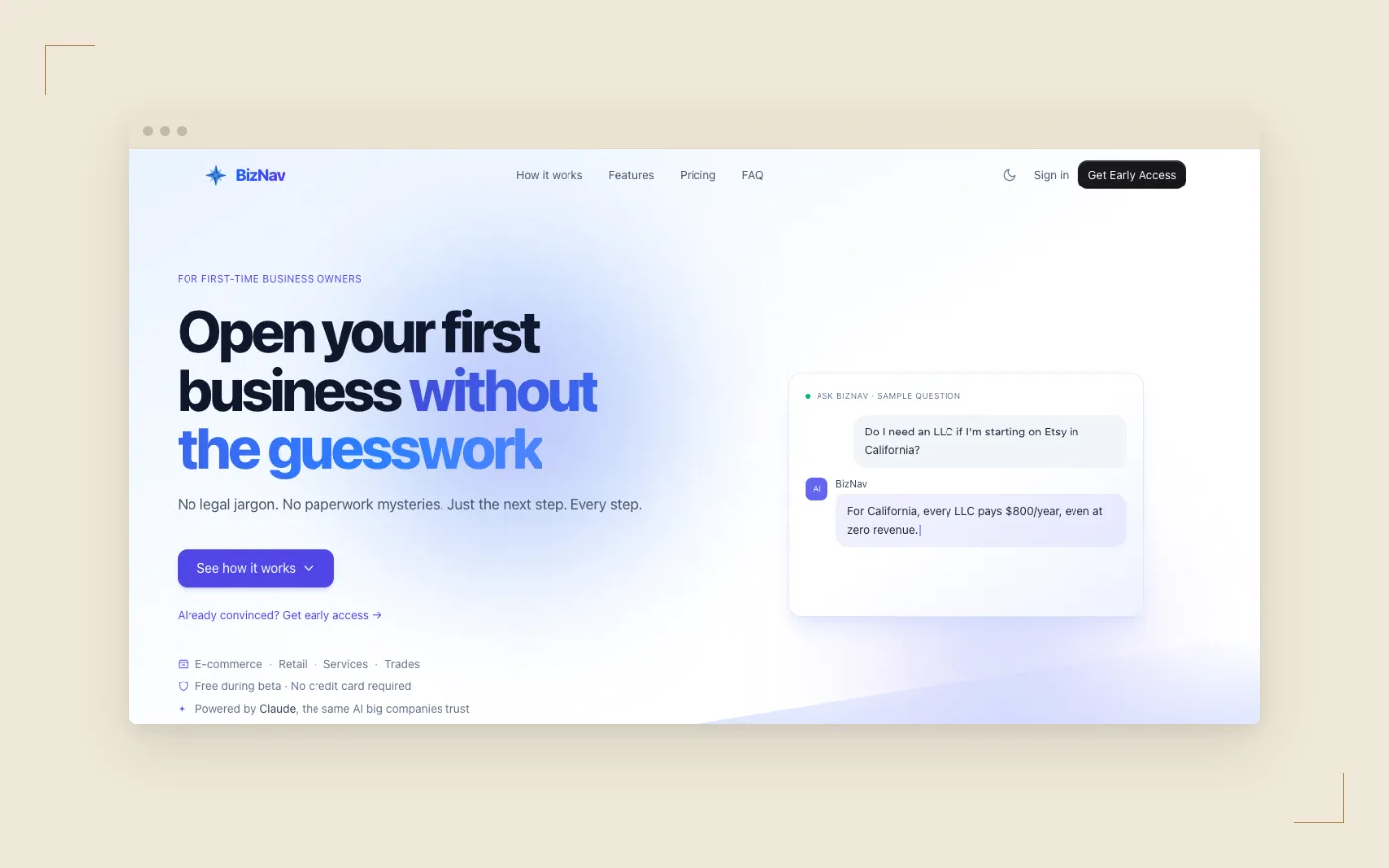
A startup building an AI guide for first-time business owners. I ran the research, set the product direction, designed and built the marketing site, and shaped the UX and UI of the app.
- Role
- Research, Direction, UX/UI & Build
- Timeline
- 2025
- Platform
- AI SaaS web app
- Tools
- Figma, Claude, SurveyMonkey, React
Status · 2025
BizNav was paused after Anthropic launched Claude for Small Business, which covered the same problem. The work below stands as a study in research-led product direction and end-to-end build velocity.
Overview
BizNav was an AI guide for people opening their first business. Starting a company is full of jargon and dead ends: which entity to pick, what an EIN even is, what to do once the paperwork clears. BizNav walked someone through all of it, one step at a time, in plain language, with an AI assistant powered by Claude that already knew their situation. I came on early and wore a few hats. I ran the research, worked out who we were building for and what to build, designed and built the marketing site, and shaped the UX and UI of the app.
The research
Before drawing a single screen, I wanted to know if this was a real problem and who felt it most. I ran a demand survey and got 224 responses. The signal was strong. 65% named overwhelming complexity as the thing stopping them, 80% said they would pay for guidance, and 36% would pay $21 to $50 a month. Almost everyone, 97%, was on a phone.
Then I went wider. I read through about 40 threads and reviews across Reddit, Trustpilot, and the BBB to hear how people actually describe starting a business, and what they can’t stand about the tools that already exist. I ranked the pain points by how often they came up and kept the direct quotes.
- 01 Overwhelmed by the whole process Very high
- 02 Not knowing which entity to choose Very high
- 03 Hidden fees and surprise upsells High
- 04 The "now what?" after forming High
- 05 State-specific complexity High
What the research told us
A few things came through loud. People are not stuck on the filing itself. That part is easy, and they know it. They are stuck before it, when nobody can tell them which entity they actually need, and after it, when they have an LLC and no idea what comes next. On top of that, every big competitor had the same reputation: hidden fees, surprise upsells, and subscriptions that were a nightmare to cancel.
The hard part isn’t filing the business. It’s everything before and after.
So the direction more or less wrote itself. BizNav would own the before and the after, explain everything in plain English, and show real pricing up front. Trust was the opening nobody else was taking.
Personas and direction
I defined the audience as the first-time founder who felt in over their head, not the seasoned operator who already knew the steps. From there I broke the product into three phases, from validating the idea through the legal and financial setup, each one split into small tasks so it never read like a wall of work. The AI assistant ran across all of it, so a question was never more than a tap away.
The overwhelmed first-time founder
- Feels in over their head
- Lives on a phone
- Will pay for real guidance
- Wants plain English, not legalese
- 01 Ideation & Validation 10 tasks
- 02 Legal Foundation 12 tasks
- 03 Financial Infrastructure 12 tasks
Build partner
I worked alongside Steven Hagene at Semper Digital Solutions on the engineering side. I owned the research, direction, design, and front-end of the marketing site. Steven took the app from designed-and-specced to live and working, doing the back-end and the production build. Steven and I have been working together since we were on the same product team at Computershare.
The app
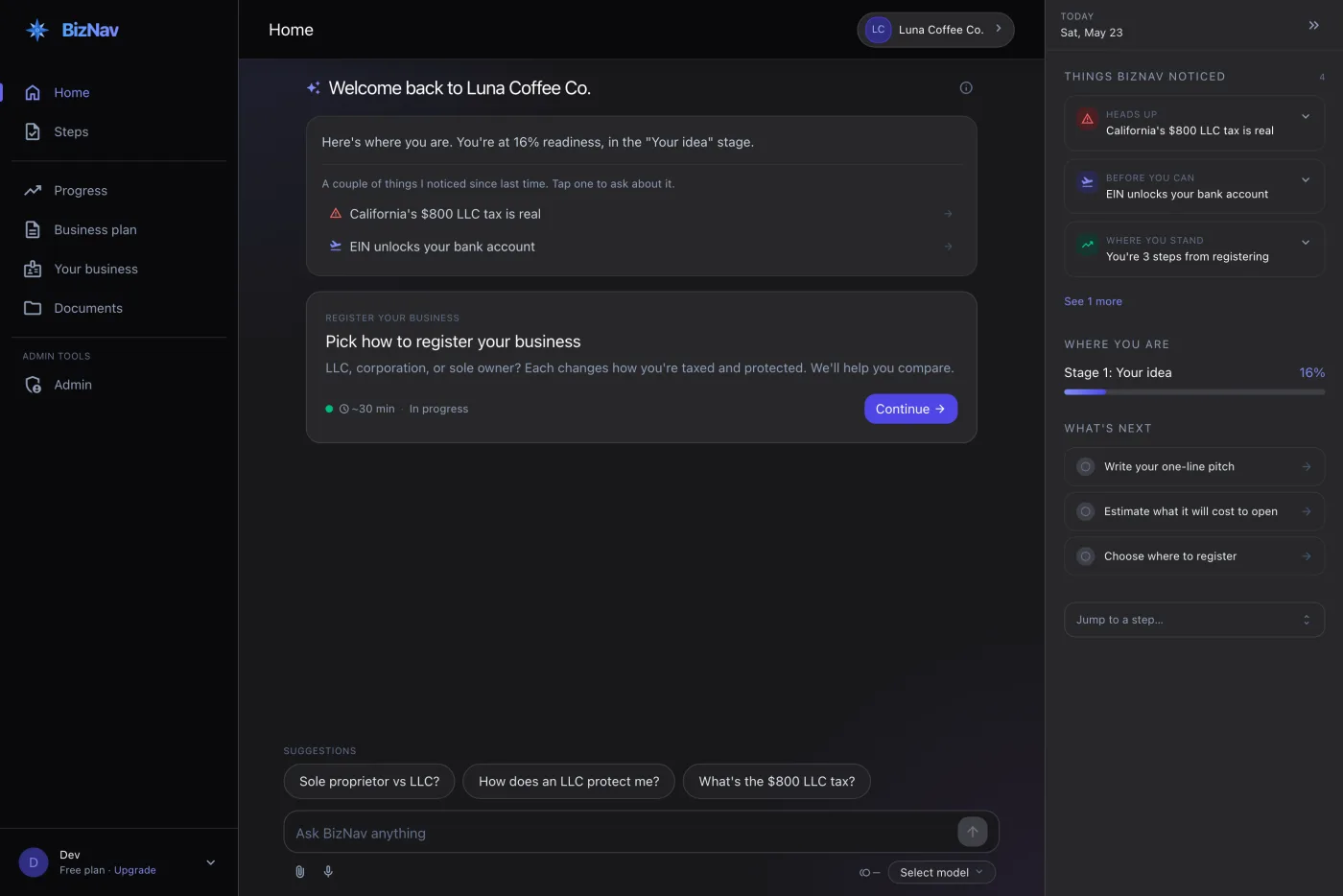
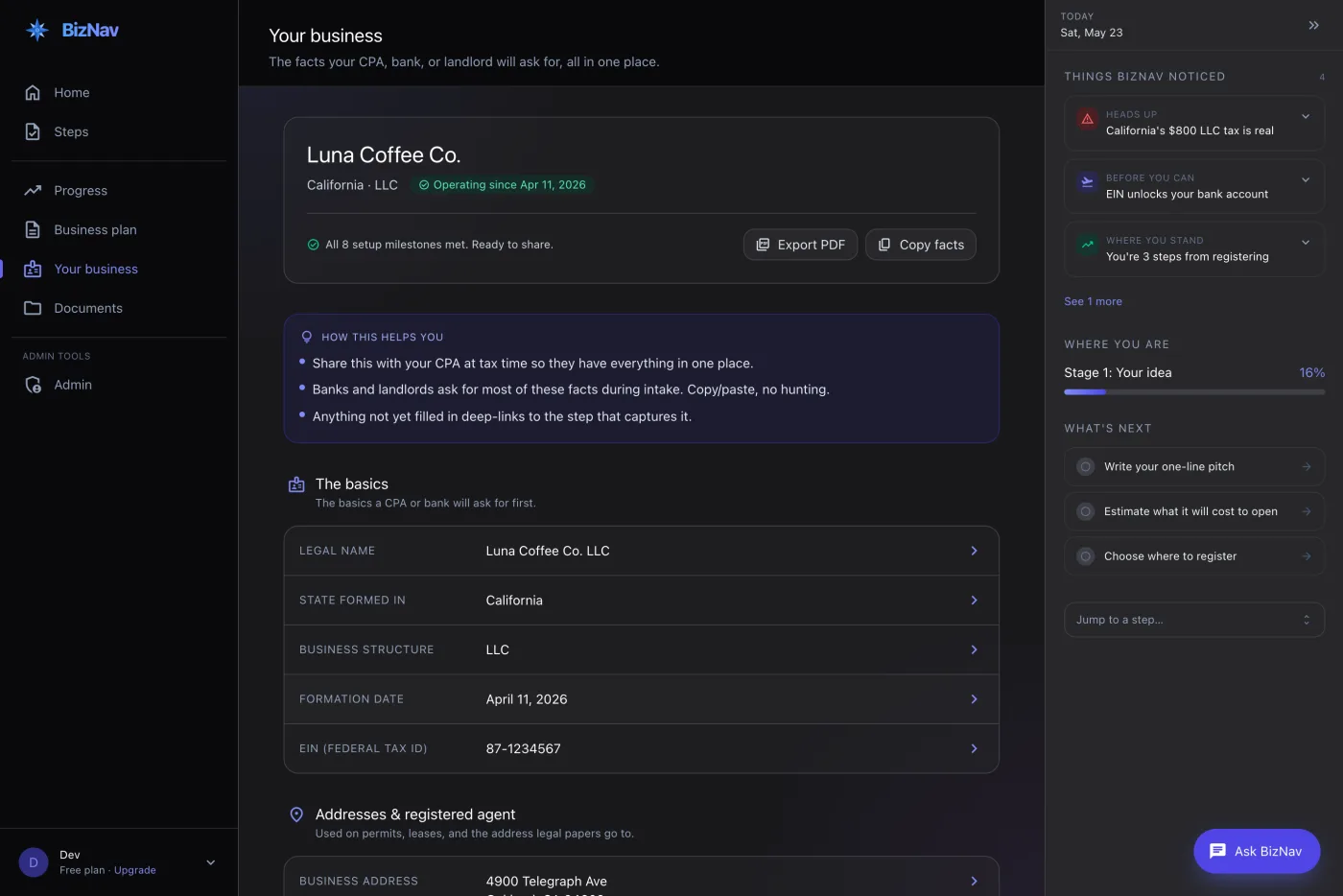
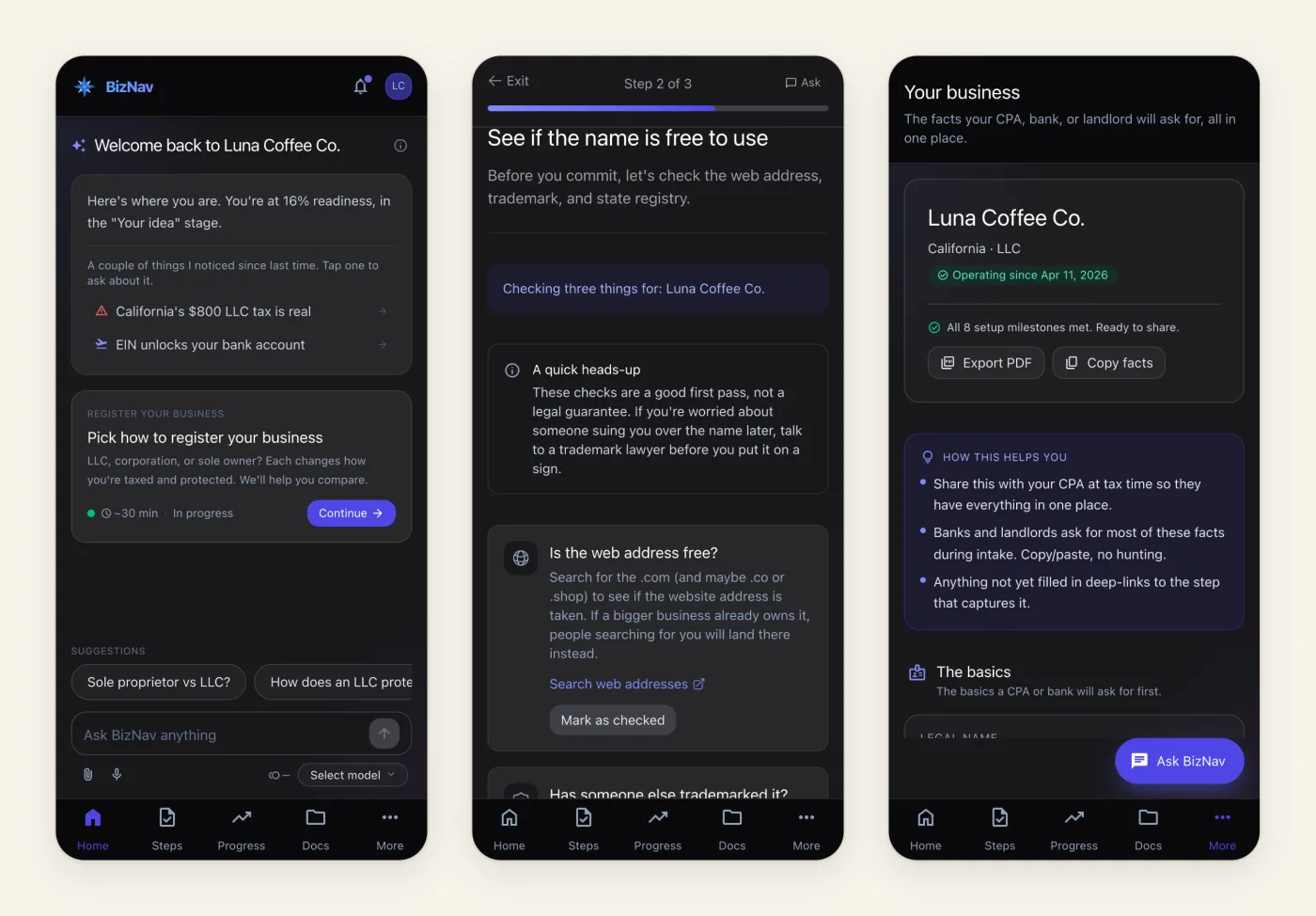
The app was dark, calm, and built for a phone first, because that was where nearly everyone said they would use it. The home screen opened with a readiness score and a single next step, so you always knew where you stood and what to do. The assistant surfaced things worth knowing before you hit them, like California’s $800 LLC tax. That was one of the exact shocks people complained about in the research.
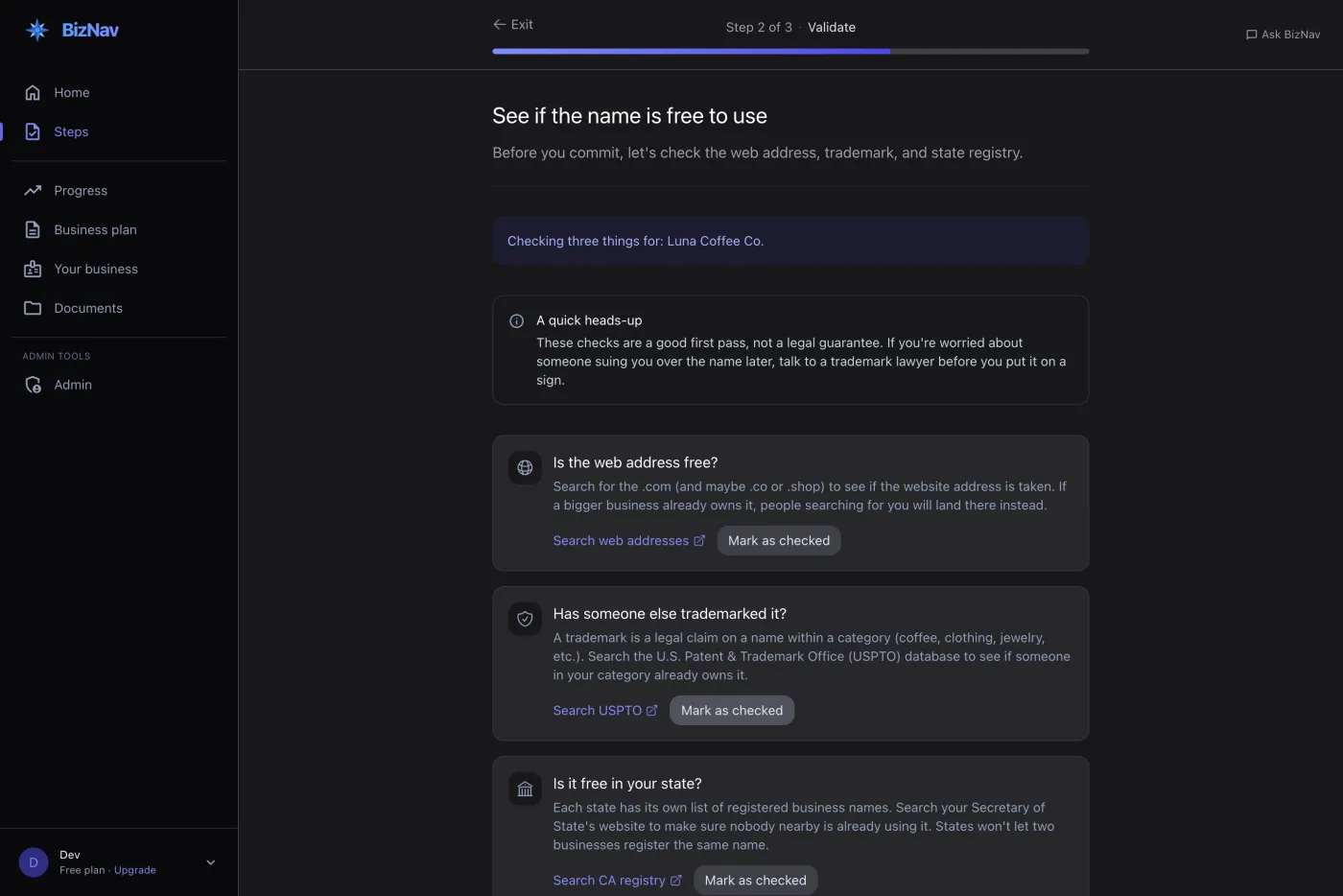
Every task was a short guided wizard that explained the why in plain language instead of legalese. The name-check step walked through the web address, the trademark, and the state registry, and it was honest about being a first pass that didn’t replace a lawyer.
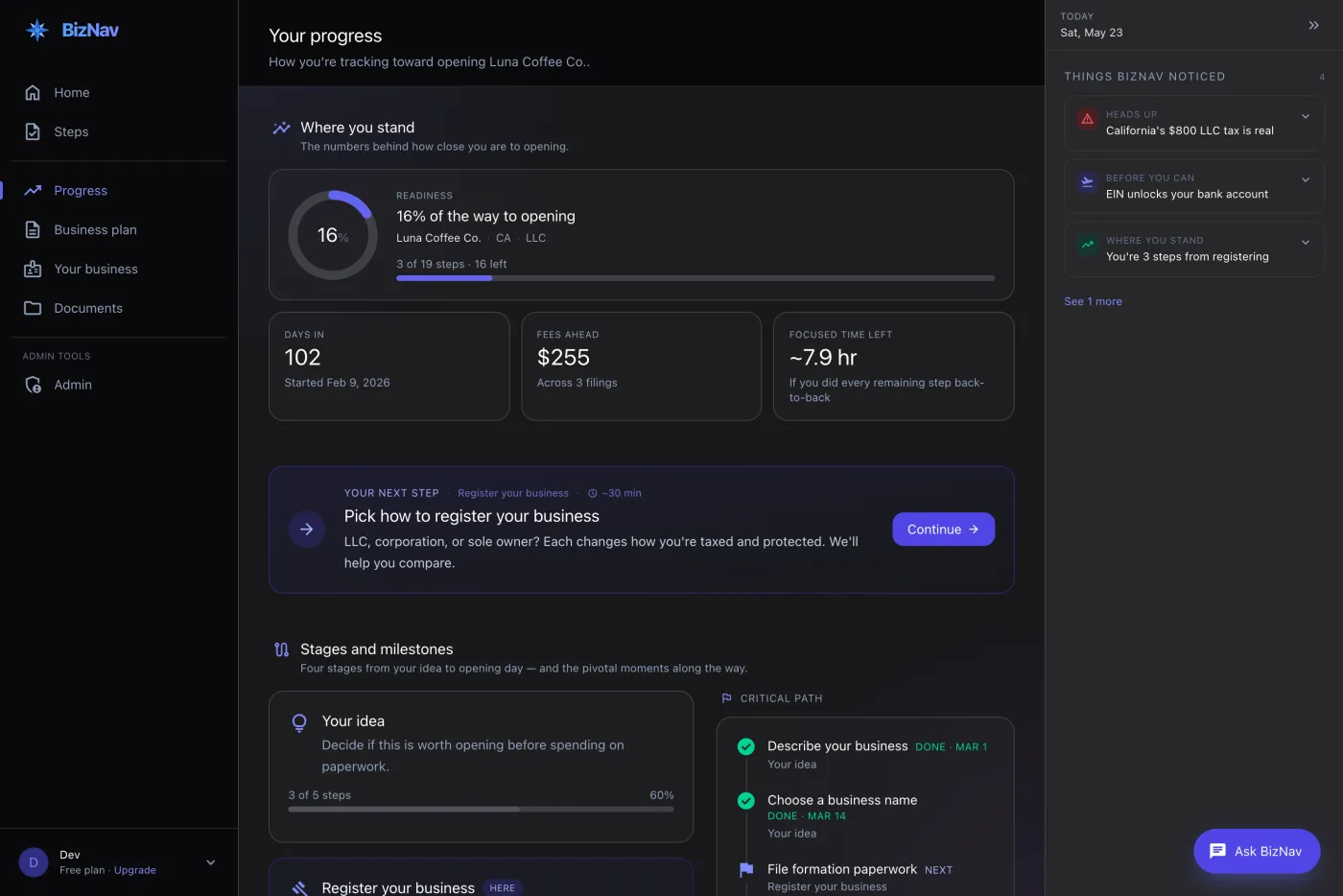
The progress view turned a vague, stressful process into something you could actually measure: how far along you were, what it had cost, and how much time was left.
And because the research kept circling back to the “now what?” problem, there was one place that held every fact a CPA, bank, or landlord tended to ask for, ready to export.
It all held up on a phone, which was where it mattered most.
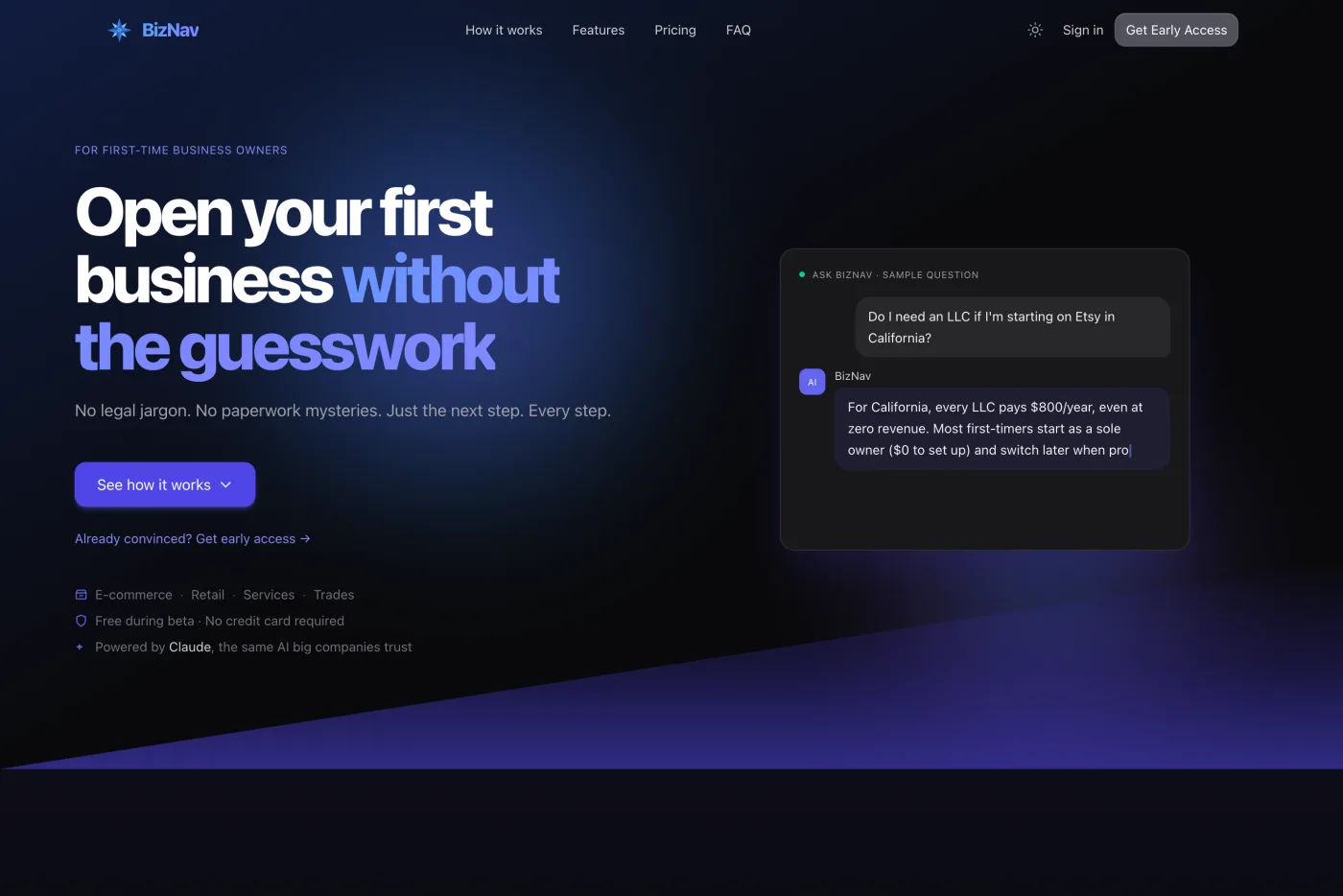
The marketing site
I also designed and built the marketing site from scratch. The messaging came straight out of the research, right down to a section that laid out what people told us before we built anything. It was live during the beta, with an early-access signup feeding it.
Outcome
Full research-to-build cycle in 8 weeks. Paused in 2025 when Anthropic launched Claude for Small Business covering the same space.